Bathroom linens · Everyday guide
A Practical Guide to Choosing a Bath Robe for Everyday Comfort
A good bath robe is more than a finishing touch to a morning routine. It is a layer for the unhurried minutes after a shower, a warm companion on a cool evening, and an easy cover-up when comfort matters more than getting dressed. The right choice balances absorbency, warmth, breathability, and freedom of movement—with fabric and care requirements that suit the way you actually live.
From plush cotton terry to lighter woven fabrics, robes vary in how they feel, perform, and wear over time. This guide explores what to look for in a bath robe, how to interpret fabric and construction details, and how to care for one so it remains a pleasure to reach for.
Start with how you will wear it
Before considering color or collar shape, picture the robe’s place in your day. Will you put it on immediately after bathing, while your skin is still damp? Will it serve as a soft layer over sleepwear while making coffee, or as a lightweight cover-up on a warm afternoon? A robe meant to absorb water has different demands from one chosen primarily for lounging.
For post-bath use, absorbency and a comfortable feel against the skin are central. A terry robe has looped yarns that create a textured surface and help take up moisture. For lounging in a heated home, a less substantial fabric may feel easier to wear for longer stretches. In a cooler room, greater fabric weight and fuller coverage can make the robe feel more enveloping.
Think about the setting as well as the task. A robe worn in a compact bathroom may need to dry efficiently between uses; one kept beside a bedroom chair can prioritize softness and warmth. If it will be packed for travel, bulk and drying time may matter more than a generous, spa-like silhouette. The most useful robe is the one that aligns with your routine, not simply the one that looks appealing on a hanger.
- After bathing: Look for absorbent fabric, secure coverage, and sleeves that do not interfere with getting ready.
- For lounging: Consider softness, ease of movement, and a weight that feels comfortable for extended wear.
- For warmer rooms or seasons: A lighter robe may feel less insulating and easier to wear throughout the day.
- For cooler mornings: A denser fabric, longer cut, or substantial collar can add a sense of warmth.
Understand the fabric before you choose
Fabric is the heart of a robe’s character. Fiber content, yarn construction, and finishing all contribute to its texture and performance. Even two robes made from the same broad fiber category may feel quite different: one can be smooth and light, another dense and plush. Reading the material description is a useful first step, but construction details help explain what that material is designed to do.
Cotton terry: absorbent and familiar
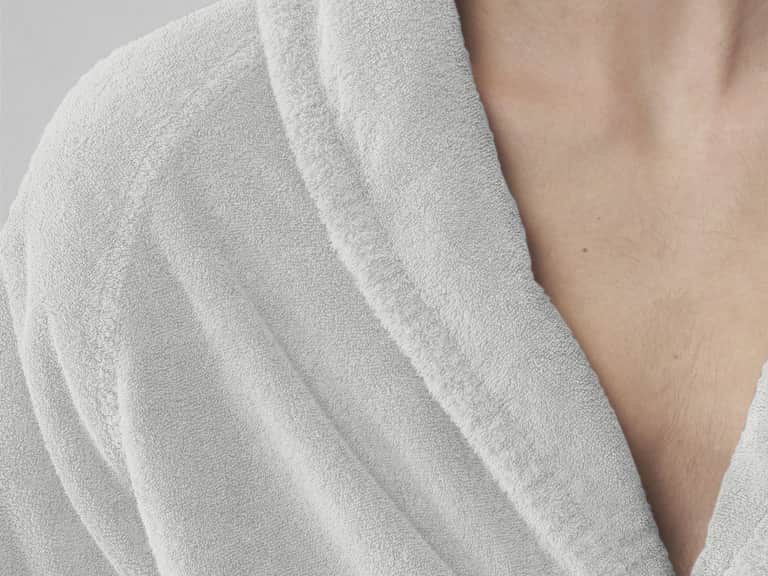
Cotton terry is a classic choice for a robe worn after bathing. Its loops create a soft, tactile surface and give the fabric a substantial, towel-like quality. Terry can feel comforting when stepping out of a shower, while also making a robe more present as a layer. The trade-off is that a dense robe may take longer to dry than a lighter one, particularly in a humid bathroom or a room with limited airflow.
Look at the description for clues about the robe’s hand and weight. A dense terry may feel plush and enveloping; a lighter construction can be easier to wear and may dry more readily. A shawl collar, as found on the Crisp Bathrobe, adds a classic, folded neckline and a softly substantial feel. This 100% cotton terry robe is garment dyed and described as quick-drying and machine washable, making those details relevant to someone seeking a practical robe for regular use.
Woven cotton: a different kind of ease
Not every cotton robe is terry. Woven cotton may feel smoother, flatter, or lighter, depending on its weave and finish. It can be a sensible direction for someone who wants coverage without the towel-like bulk of looped terry. A woven surface is not automatically more or less absorbent in every case; the exact fiber, construction, and finishing matter. Check the product specifications rather than relying on a fiber name alone.
Linen and linen blends: texture and airflow
Linen is known for a distinctive, naturally textured hand and a relaxed drape. In a robe, linen or a linen blend may appeal to those who prefer a less plush surface and an airy feel. A blend that includes cotton can alter the hand and behavior of the fabric, so review the stated composition. Linen is not necessarily the best option for drying off immediately; its suitability depends on the construction and on whether absorbency or a light cover-up is the priority.
Synthetic and blended fabrics
Some robes use synthetic fibers or fiber blends to achieve particular qualities, such as a smooth surface, lower weight, or simplified maintenance. Their performance varies by construction. If you are considering one, look for clear information about fabric content, laundering, and drying. A robe’s label is more useful than assumptions based on a broad category: “soft,” “lightweight,” and “quick-drying” are helpful descriptions, but care instructions and composition offer a fuller picture.
Weight, warmth, and the feel of the fabric
Weight affects how a robe hangs and feels, but it should not be mistaken for a complete measure of quality. A heavier robe may feel warmer and more substantial, while a lighter one may feel less cumbersome and be easier to pack or wear in a warm climate. The ideal balance depends on personal preference, room temperature, and how long you expect to wear it.
Some textile descriptions provide a weight in grams per square metre, commonly abbreviated as GSM. This figure can help compare fabric density within similar constructions, but it does not tell the whole story. Fiber, weave or pile, finishing, and garment design influence the final feel. A GSM number should be read alongside the robe’s material and care details rather than treated as a universal comfort score.
Consider the robe as a complete garment. A dense fabric with a close-fitting cut may feel warmer than a looser garment in a lighter fabric. A broad shawl collar can add coverage around the neck and chest; a hood can provide extra warmth but may feel bulky to some. Sleeve length, robe length, and the way the belt closes can all change the experience of wearing the same material.
Choose a fit that lets you move
A robe should feel relaxed, not cumbersome. It needs enough room to layer over sleepwear or clothing without pulling across the shoulders, chest, or hips. At the same time, excessive volume can make sleeves and hems awkward during ordinary tasks. A useful fit leaves space for movement while keeping the robe secure when belted.
Whenever sizing information is available, compare the garment measurements with a robe you already enjoy wearing. Pay attention to the shoulder width, sleeve length, and overall length—not only the size label. A robe that reaches the ankle may feel dramatically different from a shorter style, especially when walking around at home or stepping into a small bathroom.
- Shoulders: The seams should allow comfortable reaching and arm movement.
- Sleeves: Consider whether you prefer a cuff that stays clear of your hands or a longer, more enveloping sleeve.
- Length: Choose a hem that feels appropriate for your height, routine, and preference for coverage.
- Wrap: Check that the front panels overlap comfortably when the belt is tied.
- Belt and loops: Belt loops should sit where you can tie the robe securely without the waist feeling restrictive.
When a robe will be shared, sizing deserves extra attention. A generous cut may accommodate different wearers, but “one size” does not mean every shoulder, sleeve, or preferred hem length will feel alike. If the robe is a gift, a familiar fit reference—or a flexible, uncomplicated silhouette—can make the choice more considered.
Notice the construction details
Small design decisions shape a robe’s daily usefulness. Pockets can hold a phone, hair tie, or handkerchief, though their placement may affect the way the garment hangs. A shawl collar gives a soft frame to the neckline; a simpler collar can feel less substantial. Belt loops, reinforced seams, and a secure tie help the robe stay in place as you move.
Look for even stitching and a finish that suits the fabric. On terry, check that the pile feels consistent across the surface. On a woven robe, notice whether the seams lie smoothly and whether the fabric has a comfortable drape. These observations do not replace care information or a clear material description, but they can help you assess whether the garment appears suited to repeated wear.
Color and finish matter in a quieter way. A garment-dyed robe may have a rich, relaxed appearance, while a pale neutral can create a clean, understated impression. Dark or saturated colors may require particular attention during early washes, so follow the maker’s instructions and consider washing similar colors together. The most versatile shade is the one you will enjoy using and can care for appropriately.
Care for your robe without overcomplicating it
A robe is a frequently used textile, and a manageable care routine can help preserve its comfort. Always begin with the garment’s care label or product instructions: fiber blends, dyes, trims, and finishes may call for different treatment. General advice is a starting point, not a substitute for the instructions supplied with the specific robe.
For machine-washable cotton terry, washing with similar colors and using a suitable cycle can help keep the fabric in good condition. Avoid overloading the machine, since bulky garments need room to rinse and move. Use detergent according to its directions; excess detergent can be difficult to rinse from thick textiles. Fabric softener may affect absorbency in some terry products, so check the care guidance before using it.
Drying deserves equal care. Shake the robe out after washing to help release folds, then follow the recommended drying method and temperature. If line drying is suitable, allow air to circulate around the garment and make sure it is fully dry before storing. Damp textiles left folded or piled can develop an unpleasant stale odor. If a dryer is recommended, avoid assuming that a high-heat cycle is harmless; the label should guide the setting.
- Read the care instructions before the first wash.
- Separate colors when the label or dye characteristics call for it.
- Use an appropriate amount of detergent and leave room in the washer.
- Dry the robe thoroughly using the method and temperature recommended.
- Store it in a dry, ventilated place rather than leaving it damp in the bathroom.
For a robe used after bathing, hang it open between wears. A hook or rail that allows air to reach both sides can help it dry more evenly than a cramped, folded position. In a humid bathroom, moving it to a better-ventilated room may be useful. Washing frequency depends on use, personal preference, and how quickly the robe dries; regular airing is helpful, but it does not replace laundering.
Common mistakes to avoid
Choosing by appearance alone. A beautiful collar or color will not make a robe comfortable if its weight is wrong for your routine. Consider fabric and fit before treating design as the deciding factor.
Assuming all cotton robes feel alike. Terry and woven cotton have different surfaces and uses. Fiber content tells you what a fabric is made from; construction helps explain how it feels and performs.
Ignoring drying space. A substantial robe needs enough room and airflow to dry. If your bathroom stays humid and has little ventilation, think carefully about how and where you will hang it.
Buying a fit that is too restrictive—or too oversized. A robe should allow movement and close comfortably. Check measurements where possible, particularly if sleeve and hem length are important to you.
Using one care routine for every fabric. Wash temperatures, drying instructions, and advice about softener can vary. Follow the specific garment’s label, especially when the robe has a distinctive dye or finish.
A simple checklist before choosing
When comparing options, return to the practical questions that matter most. Does the robe need to absorb water, or is it mainly a comfortable cover-up? Will it be worn in a warm or cool setting? Do you prefer a plush, towel-like surface or a lighter drape? Can you wash and dry it using the routine you already have?
- Identify the main use: post-bath drying, lounging, or both.
- Confirm the fiber content and construction, such as cotton terry or a woven blend.
- Consider fabric weight in relation to warmth, bulk, and drying space.
- Check length, sleeve shape, wrap, belt, and available sizing details.
- Read the care instructions and make sure they suit your household routine.
- Select a color and finish you will enjoy maintaining over time.
This checklist is deliberately uncomplicated. A robe need not be chosen through technical specifications alone. The best decision combines those details with a clear sense of what feels good against your skin and works in your home.
Everyday comfort, thoughtfully considered
A bath robe occupies a small but personal place in the home. It belongs to the pause between bathing and dressing, to a slow start or a quiet end to the day. Choosing well means looking beyond a soft first impression and considering how the garment behaves after repeated wear: whether it absorbs as expected, feels comfortable through the shoulders, dries reliably, and fits into the laundry routine.
Begin with purpose, then compare fabric, construction, weight, fit, and care. Cotton terry offers a familiar, absorbent texture; woven and blended fabrics can provide a different balance of lightness and drape. No single material or silhouette is right for everyone. When the details match your habits, a robe becomes an easy, dependable layer—one that feels as considered in everyday use as it does inviting at first touch.