DIY and Upcycling Ideas for Bathroom Linens
A practical, poetic guide to breathing new life into towels, bath mats, and shower curtains, turning everyday textiles into useful, beautiful objects that slow waste and honor craft. From humble rags to lasting keepsakes, these projects invite you to see a bathroom as a workshop rather than a discard pile.
A Quiet Revolution: The Upcycled Bathroom, A Worldview
In a world where textiles travel long distances from loom to laundry, the bathroom remains a daily theater of waste and renewal. Upcycling bathroom linens is a discipline of patience and creativity: the act of reimagining a worn towel into a new utility, a faded shower curtain into a bag, or a braided rug from scraps. The practice echoes a larger shift toward circular economies, where the life of a textile is measured not just by its first use, but by its second, third, or twelfth breath of usefulness.
The themes of sustainability and craft intersect with culture in meaningful ways. By repurposing what would otherwise be discarded, households reduce energy, water, and chemical loads—while simultaneously weaving stories of resilience into everyday spaces. The bathroom—often perceived as disposable—becomes a studio for sustainable design, where modest materials can yield audacious results.
This guide embraces a National Geographic sensibility: it treats textiles as material culture, as evidence of how people live with the land, and as a shared canvas for imagination. It centers on accessible strategies that beginners can master, while inviting seasoned makers to push boundaries, test methods, and document their outcomes for a wider community of eco-conscious crafters.
Start with Thinkable, Work with Textiles: Core Concepts
Before you snip your first seam, consider three guiding ideas:
- Material truth: towels, mats, and curtains come in cotton, linen, ramie, and blends. Each fiber behaves differently when cut, washed, or re-sewn. Favor natural fibers when possible for longevity and comfort; synthetic fibers may shed microplastics when repurposed or laundered.
- Edge finishes matter: simple hems, bias bindings, or decorative trims can determine how long a project lasts and how clean the final product looks.
- Care as design: plan for a finish that can be washed and reused. A scrap-patch approach or a braided technique can create durable textures that hold up to daily bathroom use.
Sustainability is not a single act but a sequence of small, persistent decisions: buy fewer, buy better, repair boldly, and celebrate the stories textiles carry.
Project 1: Upcycled Towels — Cleaning Cloths, Mats, and Gentle Helpers
Towels after years of use can shed their luster but not their utility. The first project anchors the practice in usefulness: transforming worn towels into durable cleaning cloths, reusable rags, and even a small bath mat layered with a non-slip backing.
- Plan the cut: decide whether you want a set of 6 x 6 inch terry squares for cleaning rags or longer strips to weave a braided rag rug.
- Edge the edges with a quick zigzag or overlock to prevent fraying. A simple turned hem also works well if you prefer a cleaner look.
- For mat projects, stack two or three towels with a thin non-slip backing or a sewn-on nonslip pad. A light, water-resistant top layer keeps feet dry and reduces wear on the towel fibers.
- Label and store your new cloths by use: glass-cleaning cloths, kitchen cloths, and bathroom rags. A caddy or small bin keeps this system tidy and accessible.
A set of upcycled towels can reduce waste dramatically and introduce a tactile, slightly plush texture to your cleaning routine, reminding us that even utility textiles deserve a second life.
Project 2: Shower Curtain Reimagined — Tote Bags and Wall Hangings
Shower curtains, long after their core function fades, invite cunning repurposing. The most practical path is to repurpose a curtain into a lightweight tote bag or a decorative wall hanging. Fabric shower curtains—especially those with resilient vinyl or coated textiles—offer sturdy construction that can endure repeated use.
- Choose a curtain with a strong print or color that complements your home. Remove any metal grommets and assess seams for cleanup or re-seaming.
- Cut a straight, even edge and reinforce with a simple top-stitched hem. Add handles or a strap from the same curtain fabric or from a secondary fabric for contrast.
- For wall hangings, use an embroidery frame or a dowel for display. A few simple tassels or a fringe can finish the piece with a handmade flair.
The curtain’s design language translates well into everyday accessories. The method emphasizes thrift, environmental stewardship, and the joy of seeing everyday objects in a new light.
Project 3: Bath Mats and Braided Rugs from Fabric Scraps
Fabric scraps, when collected, are the seed for tactile bath mats and braided floor coverings. Braiding strips of terry towel fabric, rope-like coils, or rug-ready scraps can yield durable mats with chunky textures that grip behind the bathroom door and provide warm, inviting footfalls.
- Sort scraps by thickness and color to maximize design choices. Create a color block or gradient for visual interest.
- When braiding, finish ends with a cross-stitch or whipped stitch to prevent unraveling. Bind edges with a binding tape or a folded fabric edge to avoid fraying.
- Back the finished rug with a non-slip pad or a fabric backing to improve grip and longevity.
A braided rug or a patchwork bath mat becomes a story of reuse, a walking reminder that textile life cycles can be extended with patience and craft.
Care, Patterns, and Practicalities: Keeping Upcycled Pieces Fresh
Care is central to the success of upcycled bathroom textiles. Natural fibers like cotton and linen respond well to gentle laundering. If you repurpose a curtain into a tote or a rug, consider a light fabric wash to avoid color bleeding. Always pre-test colorfastness on a hidden fabric area and use cold water for most wash cycles to preserve color and fiber integrity.
Patterns and textures can guide the bathroom’s new narrative. A mosaic of towel patches can echo the bathroom tile, while a colorful curtain tote can reinvigorate a small storage corner. The art lies in restraint: select two to three color families or textures and repeat them thoughtfully to create harmony rather than chaos.
Documentation is part of the craft. Keep a small notebook or digital notes about each project: the fabrics used, the stitches chosen, washing instructions, and the project’s function. Sharing results with a like-minded community strengthens the practice and helps others learn from missteps and successes alike.
Three Voices Across Time: Inspiration for a Circular Bathroom
The ethic of reuse echoes through centuries of design and advocacy. Three voices, across very different moments in history, illuminate a path from craft to collective action.
- William Morris (1834–1896): A pioneer of the Arts and Crafts movement, Morris championed handcrafts and the moral economy of making. His insistence on beauty in everyday objects has modern resonance in the way upcycled linens can be celebrated rather than hidden. In a bathroom, Morris’s ideals invite us to see towels and curtains as potential canvases for personal storytelling, not throwaway textiles.
- Le Corbusier (1887–1965): A modernist whose ideas about modular design and functional form suggest a practical, pared-back philosophy. When applied to bathroom textiles, Corbusier’s spirit organizes our upcycling projects into repeatable systems— шаблонаs of simple seams, durable edges, and adaptable modules—creating a lifecycle approach where items can be rebuilt into new forms rather than discarded.
- Greta Thunberg (b. 2003): A contemporary voice of climate activism who emphasizes accountability and intergenerational stewardship. Her advocacy reminds us that small household decisions accumulate into environmental impact. Upcycling bathroom linens becomes a micro-gesture of responsibility, connected to broader efforts to reduce textile waste and to support sustainable farming, fiber choices, and responsible production.
Each voice, standing at a different point in time, converges on a shared responsibility: design that respects resources, celebrates craft, and invites others to participate in a more thoughtful life with textiles.
Product Spotlight: Nap Rap Pillow Cases Set
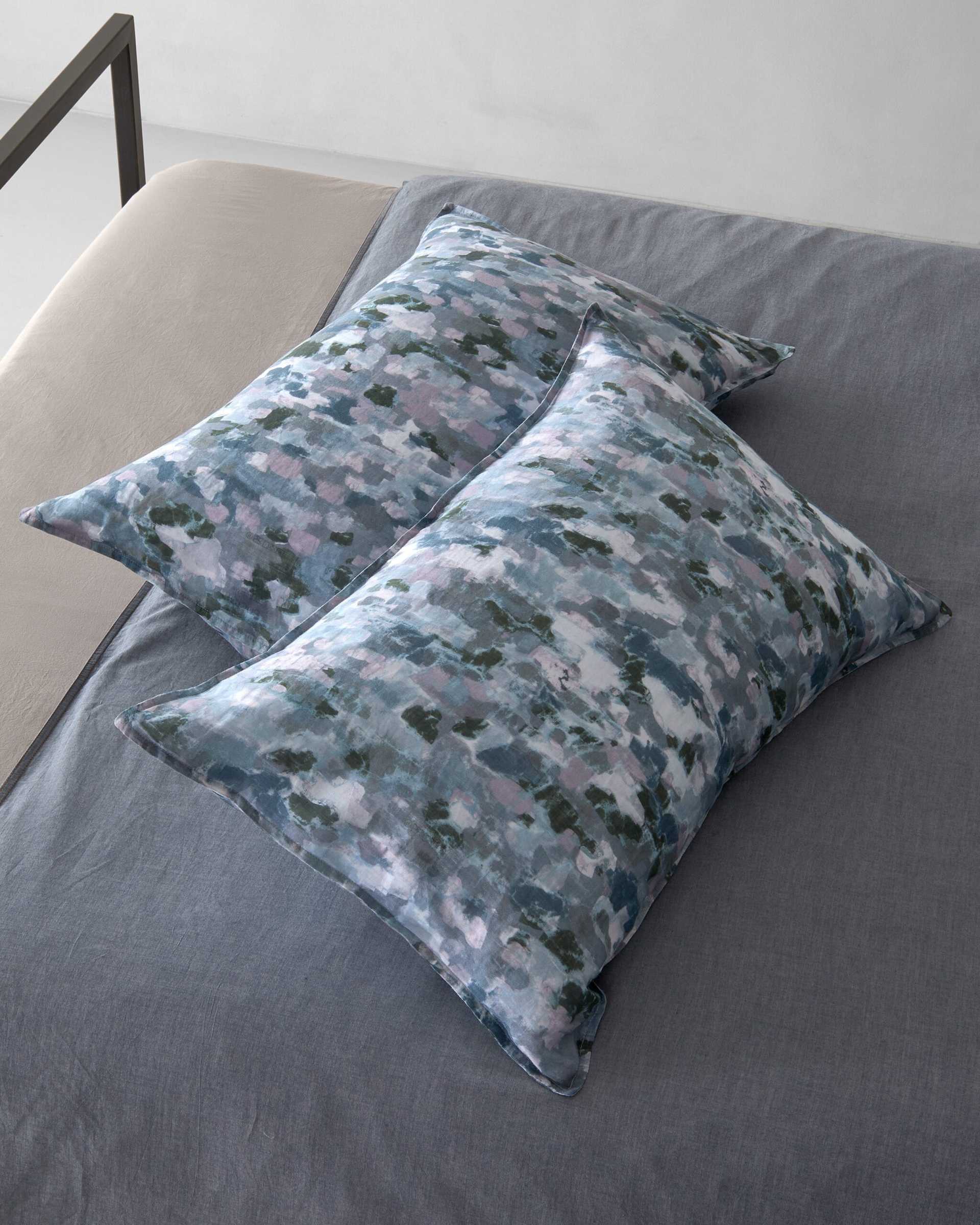
A contemporary textile that can spark upcycling conversations is the Nap Rap Pillow Cases Set by Society Limonta. This two-piece set blends bold camouflage-inspired print with a soft ramie textile, offering a contemporary bedroom accent that can inspire future upcycling ideas.
Product details:
- Full product name: Nap Rap Pillow Cases Set
- Source: Society Limonta
- Fabric: Printed ramie fabric
- Content: Two pillowcases per set
- Description: Bold yet versatile with camouflage-inspired prints; designed for practical everyday use
- Link: Nap Rap Pillow Cases Set — Learn more
While Nap Rap pillowcases present a striking aesthetic, they also offer a pathway to inspiration for upcycling. The ramie fabric holds up to repeated handling, and its surface invites creative reinventions. If you’re inspired to explore, consider how the Nap Rap set’s bold lines could be pared back into patchwork, or repurposed as the centerpiece of a braided textile project using scraps from other bathroom textiles.
Careful, Curious, and Community-Oriented: A Path to Shared Knowledge
The journey toward upcycling is partially a path of discovery and partially a practice in community. Create a small, shareable project log: document the fabric types, the stitching, the finishing techniques, and the care requirements. Invite feedback, swap tips, and showcase before-and-after photos. The more people share, the more our practical knowledge grows and the more confident we become in giving textiles a second life.
Local textile recycling programs and charitable textile drives can supplement this effort. When a project outlives its usefulness in the home, consider donating or participating in local textile recycling programs that repurpose fabric into new materials. The goal is to extend life, not simply to replace consumption with new purchases.
Conclusion: A Bathroom You Can Be Proud Of
Upcycling bathroom linens is more than a hobby; it is a practice of mindful consumption, rooted in craft and sustained by community. It invites residents to see textiles not as disposable inputs but as living materials that carry stories of hands, time, and place. In this light, a bathroom becomes a gallery of personal narratives—one that shows how beauty and practicality can coexist with care for the planet.
Whether you start with worn towels, repurposed shower curtains, braided scraps, or even a bold Nap Rap Pillow Case Set as a spark for design exploration, you are taking part in a long tradition of making do with what you have, elevating it, and sharing it. That is the essence of responsible living: a daily act of creativity that respects resources, honors craft, and invites others to participate in a more sustainable future.