Bathroom Linens · A Practical Guide
Choosing Bath Towels by GSM: What Weight Means for Absorbency and Drying
A towel can feel airy and crisp, or plush enough to make the end of a bath feel like a small luxury. GSM helps explain some of that difference. Short for grams per square meter, it measures fabric weight across a standard area—useful information, but not a verdict on quality. To choose well, consider the number alongside fiber, weave, laundering habits, and the conditions in which your towel will dry.
In a bathroom, where comfort has to meet routine, the best bath towel is not necessarily the heaviest one on the shelf. It is the one that absorbs comfortably, dries within the rhythm of your household, and feels right each time you reach for it.
What does GSM mean on a bath towel?
GSM means grams per square meter. It describes the mass of a square meter of fabric, giving shoppers a standard way to compare textile weight even when towels have different dimensions. A higher GSM generally indicates a denser, heavier fabric; a lower GSM generally indicates a lighter one.
Think of GSM as a useful clue about a towel’s construction and hand feel—not a complete performance score. It does not directly tell you how quickly a towel will absorb water, how long it will take to dry, whether it will remain soft after repeated washing, or how durable its loops are. Those qualities also depend on the fiber, yarn, pile, finishing, and care.
It is also important to distinguish weight from size. A large bath sheet may weigh more overall than a smaller towel made at the same GSM, simply because it contains more fabric. GSM is designed to help compare fabric weight per area, while the towel’s dimensions tell you how much surface coverage you are getting.
When a label provides GSM, use it to place a towel within a broad weight range. Then read the rest of the description and care instructions. A number can help narrow the field; your everyday needs decide the final choice.
A practical guide to towel weight ranges
There is no single GSM scale that every maker uses to describe towels, and the boundaries between light, medium, and heavy are not absolute. As a practical guide, bath towels often fall into ranges like these:
- Below about 400 GSM: Light, compact towels that tend to feel less bulky and may be convenient for travel, gym bags, small bathrooms, or frequent washing.
- About 400–600 GSM: A versatile middle ground, offering a comfortable everyday feel without the most substantial weight. Many households find this range balances coverage, absorbency, and manageable drying.
- About 600–800 GSM: Heavier towels that often feel plush and substantial. They can create a more enveloping experience, but may take longer to dry and occupy more space.
- Above about 800 GSM: Very dense towels, often selected for an especially cushioned feel. They are not automatically more absorbent in practice and may require more drying time and care.
These are guidelines rather than standards. A towel at 550 GSM can feel more absorbent than one at 650 GSM if its fiber and terry construction are better suited to water uptake. A fabric’s finish can also change its initial feel, and repeated laundering can alter how it behaves. If you can handle towels in person, notice how the loops spring back and whether the fabric feels dense, stiff, or pleasantly supple.
Weight is most useful when comparing towels that are otherwise broadly similar—especially when the fiber content, weave, and size are comparable. It is less useful as a stand-alone ranking across different materials or constructions.
How towel GSM relates to absorbency
Heavier towels often contain more yarn in a given area. That can create a fuller terry pile with more loops to meet the skin and take up moisture. This is one reason high-GSM towels are often associated with a plush, thirsty feel. Yet density alone cannot guarantee superior absorbency.
Fiber matters. Cotton is widely used in bath towels because its fibers can take up water and its familiar terry construction suits daily drying. The particular cotton, yarn quality, spinning, and finishing influence the towel’s performance and feel. Long-staple fibers, for example, can be made into smooth, durable yarns, but a fiber description by itself still does not prove that a towel will suit every household.
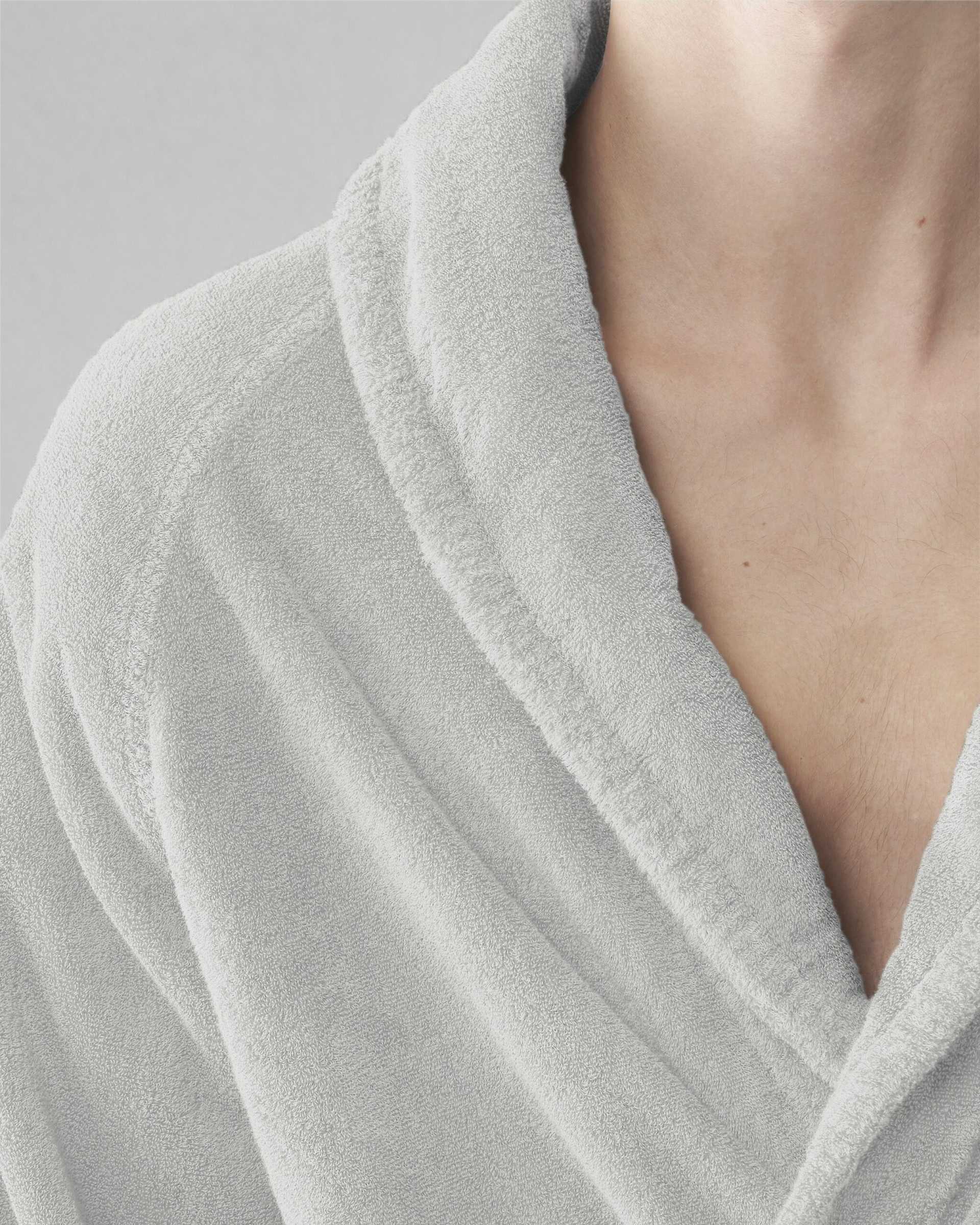
Construction matters, too. Terry towels have loops that increase the fabric’s surface area. Loop height, density, and yarn structure all affect how the towel meets water and skin. A flat-woven or waffle-style towel has a different texture and profile from a thick, looped terry towel, even if the stated weight is similar. The difference is not simply one of “better” or “worse”; it is a difference in use and preference.
Finishes can influence how a towel behaves when new. Some finishing treatments make fabric feel especially soft at first, but heavy use of fabric softener at home can coat fibers and reduce water uptake over time. If a new towel seems less absorbent than expected, follow its care label and wash it before drawing conclusions. Avoid assuming that adding extra detergent or softener will improve performance; residue can work against the clean, absorbent feel you want.
For a towel that dries you efficiently, look at GSM as one factor among several. Ask whether the fiber content is clearly stated, whether the texture suits your preferences, and whether the care directions are realistic for your laundry routine.
The drying-time trade-off
A plush towel can feel like a welcome comfort, but that fullness has a practical consequence: it can hold more water and release it more slowly. Higher-GSM towels often need more time to dry than lighter towels, particularly in a cool, humid bathroom with limited airflow. A towel left damp between uses may feel heavy and less inviting the next time you reach for it.
Drying time is influenced by more than GSM. Room temperature, humidity, ventilation, the spacing of hooks or rails, and whether the towel is spread out all make a difference. A heavy towel hung in a tight fold on a crowded hook may take longer to dry than the same towel fully opened on a well-ventilated rail. Even a lighter towel can remain damp in a steamy room without adequate airflow.
Consider the household’s pace. If towels are used repeatedly throughout the day, several people share one bathroom, or laundry days are spaced apart, a lighter or medium-weight towel may be more practical. If you have good ventilation, enough rail space, and prefer a generous, cocooning feel, a heavier towel may be entirely workable.
Drying efficiency is not just a convenience. Regularly allowing towels to dry thoroughly helps keep them fresher between washes. Give each towel room to spread, open a window or use bathroom ventilation when appropriate, and avoid leaving a wet towel scrunched in a hamper. These simple habits can matter as much as choosing a particular GSM.
Choose a weight that fits the way you live
Before choosing a bath towel, picture the ordinary moment of use—not an idealized bathroom with endless shelves and perfect sunlight. The right towel should work with your space, climate, laundry habits, and preferred sensation against the skin.
For everyday family use
A medium-weight towel can be a dependable compromise: comfortable enough for daily bathing, yet less bulky to wash and dry than an especially dense option. In a busy home, look for clear care instructions and enough towels in rotation so each one has time to dry fully.
For a small or humid bathroom
Consider lighter towels, a more open weave, or a less dense terry construction. They are often easier to hang in a compact space and may dry sooner. Improve airflow where possible, since a poorly ventilated room can make any towel feel persistently damp.
For a plush, spa-like feel
A higher-GSM towel may offer the softness and substance you enjoy. Make sure you have somewhere to spread it out after use and are comfortable with the additional laundry weight and drying time. A thick towel is a pleasure when it is dry and ready to use.
For travel, sport, or quick changes
A lighter towel is easier to pack and less cumbersome in a gym bag. It may not have the enveloping feel of a dense bath towel, but portability and quicker drying can be more valuable in these settings.
There is no need for every towel in a home to have identical weight. A household might prefer plush bath towels for a well-ventilated main bathroom, lighter towels for children or guests, and compact options for travel. Matching the towel to its job is often more satisfying than searching for a single “perfect” number.
Read the fiber and weave, not just the number
GSM is a measurement of weight, not fiber identity. Check whether a towel is cotton, a cotton blend, or another textile, and look for a clear description of its weave or pile. Fiber content can affect absorbency, softness, durability, and care, while weave determines how the fabric is structured and how it feels in use.
For conventional terry, examine the loops. A well-made towel should feel balanced rather than merely heavy, with loops that appear even and secure. A very dense fabric might feel luxurious but be cumbersome in a household where towels are washed often. Conversely, a lightweight towel may be practical but feel too spare if you want generous coverage and a plush hand.
Be wary of treating thread count as a universal shortcut for bath towels. Unlike the way some shoppers use thread count when discussing sheets, towel weight, fiber, and loop construction are usually more directly relevant to the towel’s character. Even then, no single specification can replace a careful look at the whole description.
It is also worth checking the dimensions. A bath sheet provides more coverage than a standard bath towel, but the additional area makes it heavier in total and more demanding to dry. If you like wrapping up after bathing, that extra size may be welcome. If closet space is limited, a standard-size towel may be easier to store and rotate.
Care habits that preserve absorbency
The way you wash and dry a towel affects its long-term feel. Always begin with the manufacturer’s care label, particularly for towels with decorative borders, special finishes, or blended fibers. When instructions allow, these habits can help keep towels fresh and functional:
- Wash towels with similar items, separating them from garments with hooks, zippers, or other hardware that could snag terry loops.
- Measure detergent appropriately. Excess detergent can leave residue in the fabric; more soap does not necessarily mean a cleaner towel.
- Use fabric softener sparingly or avoid it when absorbency is the priority, since residue can affect water uptake.
- Do not overload the washer. Towels need room to move through the wash and rinse effectively.
- Shake towels out before hanging or placing them in the dryer so the fabric opens up rather than drying in a compressed bundle.
- Dry thoroughly according to the label, but avoid excessive heat if the care instructions warn against it.
- Hang towels so air can circulate around them, rather than leaving them folded over a crowded hook.
Following these basics can also help towels maintain their appearance. Bleach, whiteners, high heat, and aggressive washing may not be suitable for every color or finish. If a towel’s care label recommends mild detergent or a delicate cycle, treat that direction as part of the product’s design rather than an optional detail.
For context, weight specifications also appear on other bathroom textiles, though they should not be confused with bath-towel ratings. The [Natura Luxury Bath Mat], for example, lists a weight of 600 g/sqm and is made from long-staple combed cotton. That figure describes the bath mat’s fabric weight; it does not establish how a bath towel at the same GSM would feel or perform. Product type and construction remain essential to interpretation.
A simple checklist before you buy
When comparing bath towels, take a moment to look beyond the headline number. This short checklist can help turn a specification into a decision that makes sense for your bathroom:
- Choose the intended feel. Do you want airy and practical, comfortably substantial, or deeply plush?
- Check GSM in context. Use it as a comparison of fabric weight, not as a guarantee of softness, absorbency, or quality.
- Confirm fiber content. Make sure you know what the towel is made from and whether that material suits your preferences.
- Look at the construction. Terry loops, waffle texture, and flat weaves have different feels and drying characteristics.
- Consider dimensions. A larger towel offers more coverage but takes up more storage and laundry space.
- Be realistic about drying. Account for bathroom ventilation, towel-rail space, humidity, and how often the towel will be used.
- Read the care label. Make sure the recommended routine fits your household and washing equipment.
If you are shopping online, look for precise specifications rather than vague descriptions such as “hotel weight” or “extra plush.” If the seller does not list GSM, you can still compare materials, dimensions, construction, and care details. A missing number does not automatically make a towel unsuitable; it simply means one comparison point is unavailable.
Common misconceptions about towel weight
“The highest GSM is always best.”
Not necessarily. A higher number usually means more fabric weight per area, but it can also mean a bulkier towel and longer drying time. The best towel is the one that balances comfort with practical care.
“A heavier towel must absorb more.”
Weight may contribute to a fuller pile, but fiber and construction affect how effectively the towel takes up water. Compare the complete specification rather than relying on GSM alone.
“A light towel is poor quality.”
Lightweight towels can be thoughtfully made and especially useful in small bathrooms, warm climates, or travel settings. Their appeal lies in ease of handling and drying, not in imitating a heavy terry towel.
“GSM tells me how soft the towel will be.”
It can hint at density and substance, but softness depends on fiber, yarn, finishing, and use. Some people prefer the smoothness of a lighter fabric; others want the cushioned sensation of a thicker pile.
The bottom line on towel GSM
GSM offers a useful shorthand for bath-towel weight. In broad terms, lighter towels are often easier to handle and quicker to dry, while heavier towels may feel plusher and more substantial. But those are tendencies, not guarantees. Absorbency, softness, durability, and drying time are shaped by a fabric’s fiber, weave, construction, finish, care, and surroundings.
Start with the experience you want, then use GSM to compare towels that are similar in size and material. Consider the realities of your bathroom: ventilation, humidity, rail space, and laundry routine. A towel that feels beautiful but stays damp for hours may not be the right choice for everyday use. A lighter towel that dries quickly may be more appealing than its modest weight suggests.
Ultimately, choosing well is less about finding the most impressive number than finding the right balance. The ideal bath towel welcomes you after a shower, absorbs comfortably, dries reliably, and fits naturally into the care of your home.